
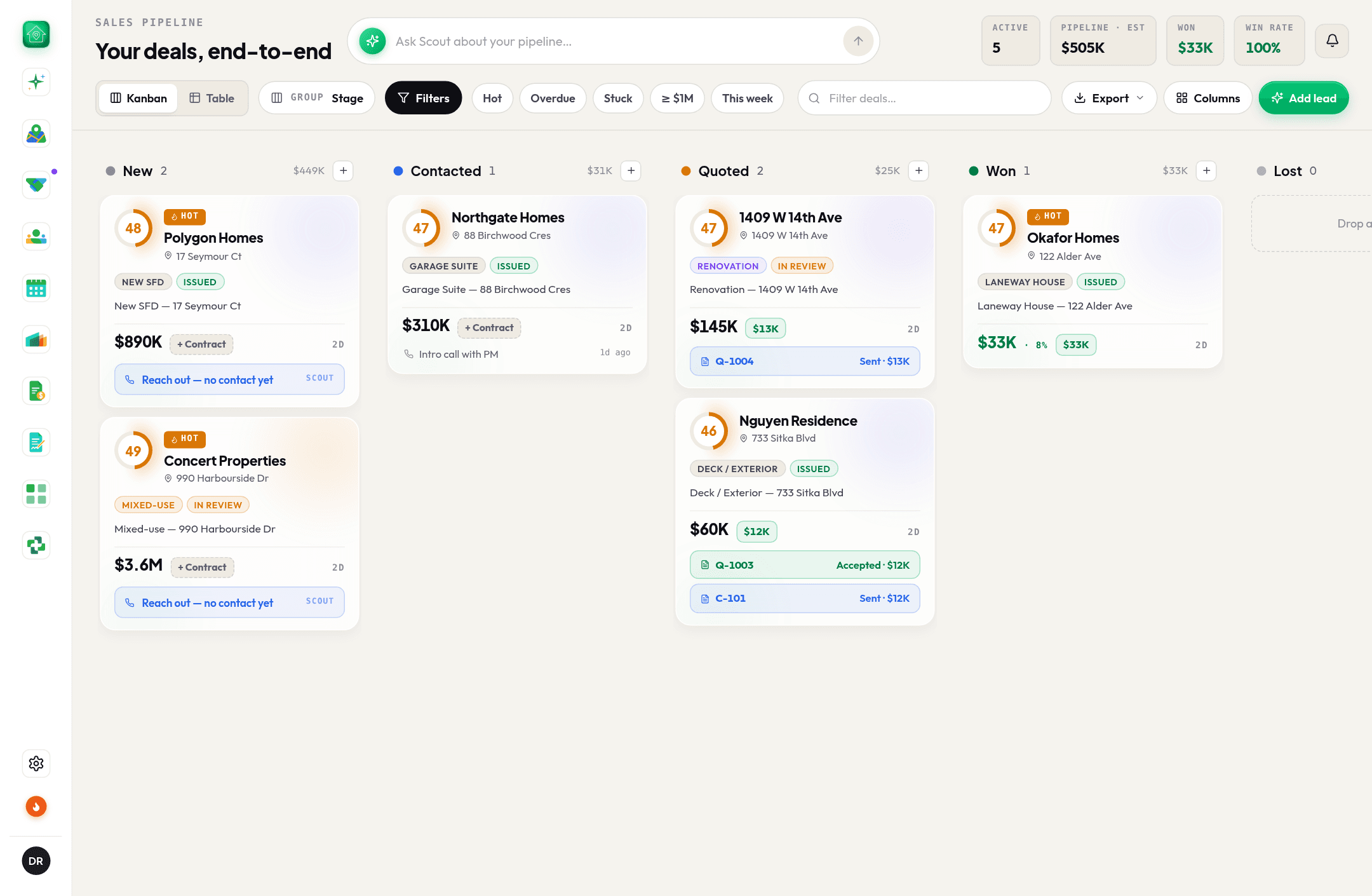
1. Leads come from permits, not forms
A general-purpose CRM such as Salesforce or HubSpot is excellent at keeping a record of what a rep typed in. It does not know that a builder in your area filed a permit on Tuesday for a twelve-unit townhouse project. For a lumber yard or any LBM dealer, that permit is the lead, and finding it is most of the work.
BuildMapper reads the permits across British Columbia, Alberta and Ontario every week and puts each new project in front of the rep it fits, scored for what you sell.
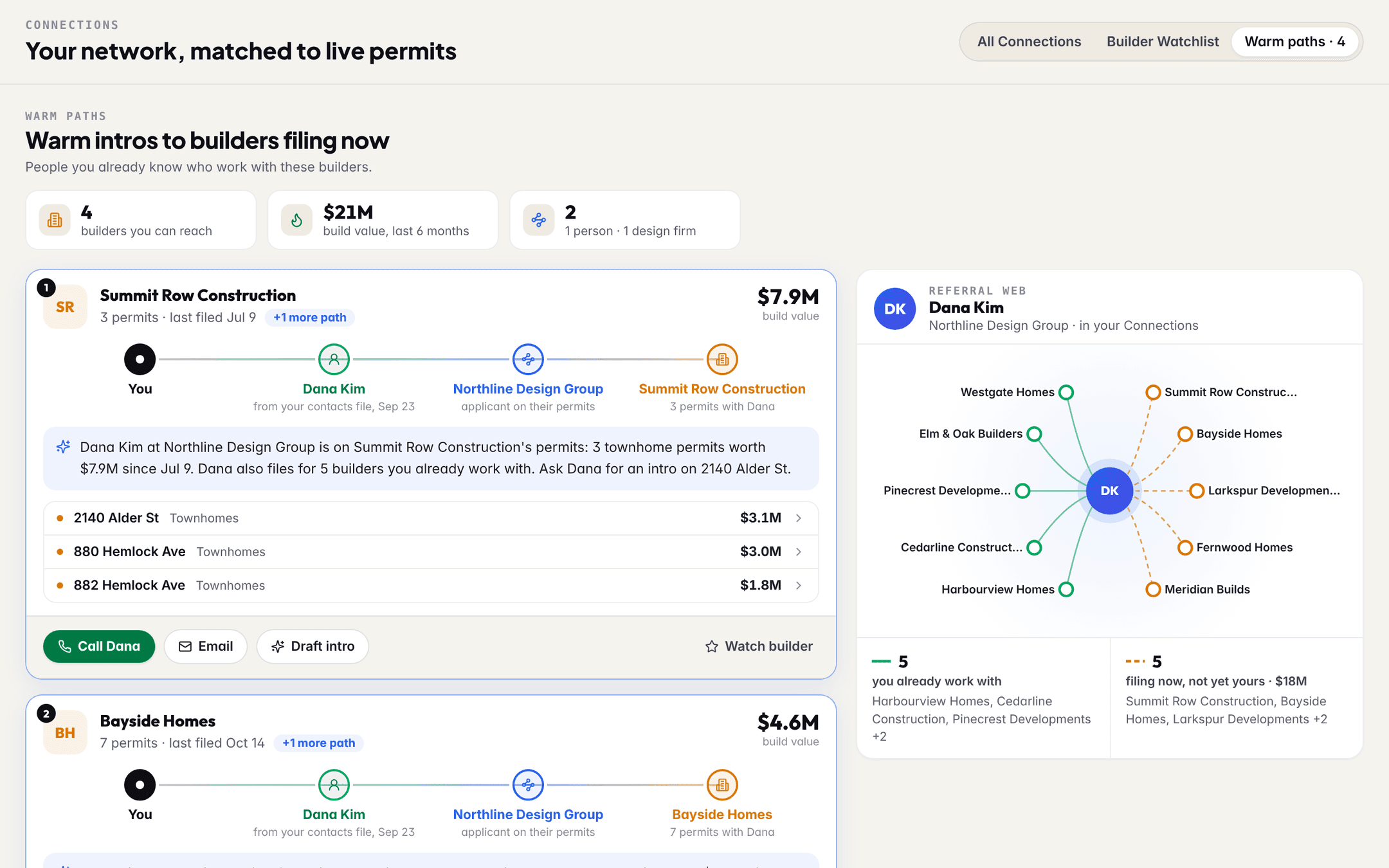
2. The account is the builder, and the builder files again
A yard sells to the same builders project after project. The useful question is not "what stage is this deal in" but "which of my builders just started a new job, and which have gone quiet". BuildMapper ties every permit to its builder, flags the builders you watch when they file, and shows customers who have stopped filing or buying.
3. Managers need the misses, not a dashboard
A sales manager at a yard does not need another chart. They need to know which new jobs nobody called, which quotes went out and were never followed up, and which won jobs never had the upsell offered. That is the Leak Tracker's whole page.
Keep the CRM you have
If the company already runs Salesforce, keep it as the book of record: BuildMapper pushes leads to it. The reps work the permits in BuildMapper, where the work starts.